
Falling for Downtime

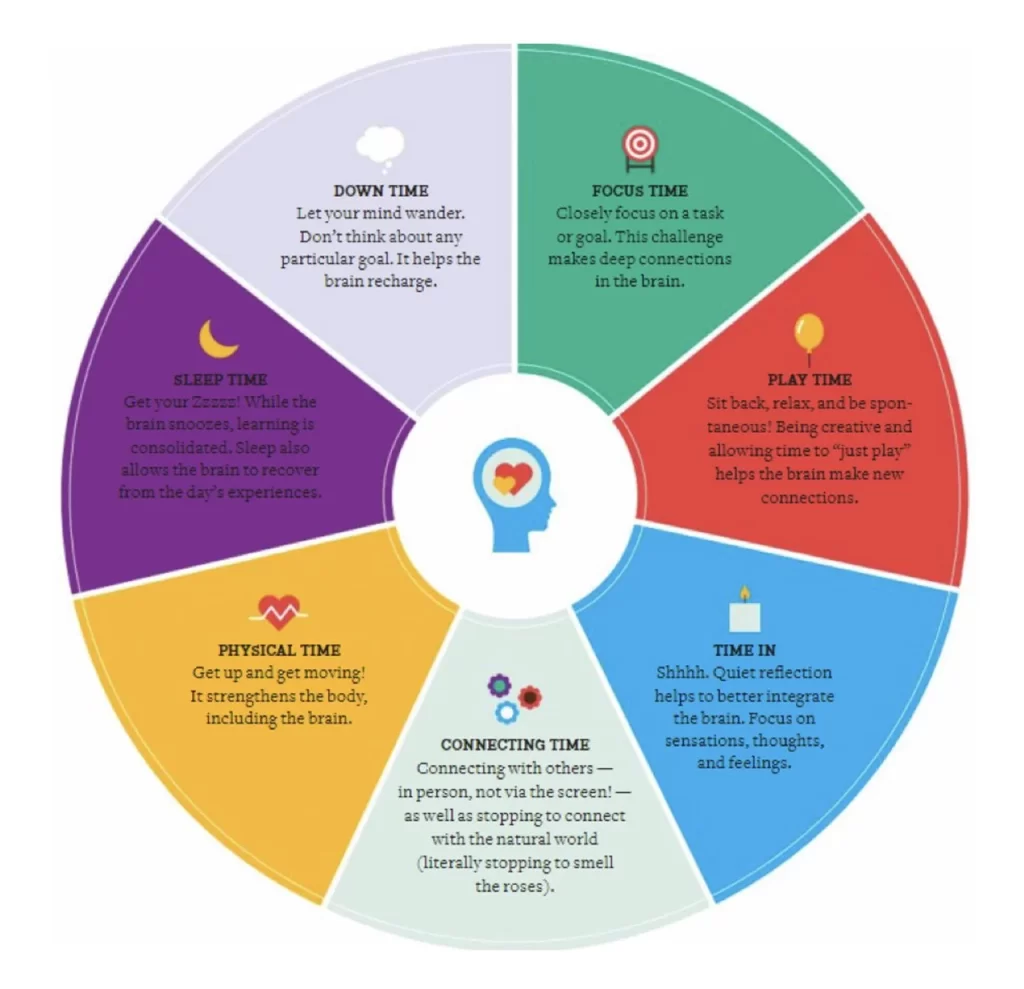
The Seven Daily Activities
- Focus Time: Engaging in goal-oriented tasks and deep concentration that make close connections in the brain.
- Play Time: Participating in spontaneous, creative, or novel activities that foster fresh neural connections.
- Connecting Time: Interacting with other people and the natural world to activate relational brain circuits.
- Physical Time: Moving the body through aerobic exercise to strengthen brain plasticity.
- Time In: Practicing internal reflection and quiet self-awareness to integrate inner states.
- Downtime: Allowing non-focused relaxation or mind-wandering to let the brain recharge.
- Sleep Time: Getting adequate rest (7 to 9 hours) to consolidate learning and promote biological recovery. [1, 2, 3, 4, 5]
Wow what a great summer we had! I am one who takes full advantage of the summer weather and goes outside to enjoy nature, the beach, the amazing world we live in. This weekend feels like our first real Fall weekend, with cooling weather and rain. Yesterday I enjoyed a bike ride outside, today is my first fall downtime day. Downtime is so crucial for our mind. Dan Seigel’s the “Mindful Platter” where he describes how downtime is important for our mind’s function. Daily intake for your mind, comparably to the new Canadian food guide plate.
How do you like to enjoy your downtime? Downtime doesn’t mean procrastination, but Downtime is “When we are non-focused, without any specific goal, and let our mind wander or simply relax, we help the brain recharge.” When we allow ourselves to be less focused and have a break from task to task – it allows our brain to have a chance to connect odd pieces of information together and can cause insight or intuition on a problem or challenge. You know when you are in the shower or on a bike ride – and you are not thinking about the problem, and then all of a sudden there’s the solution. It is important to allow our brains, and our bodies to have these times to regenerate.
Enjoy your Sunday!